
Clinic Journal · October 10, 2026
Could a scraping tool or friction massage help a stiff neck, sore tendon, or restricted shoulder? Some people experience relief, and research suggests that certain tool-assisted treatments may help pain and movement in the short term. The evidence is less clear about lasting recovery—and does not establish that scraping removes toxins, breaks apart adhesions, or makes an injury heal faster.
Similar tools, different treatments
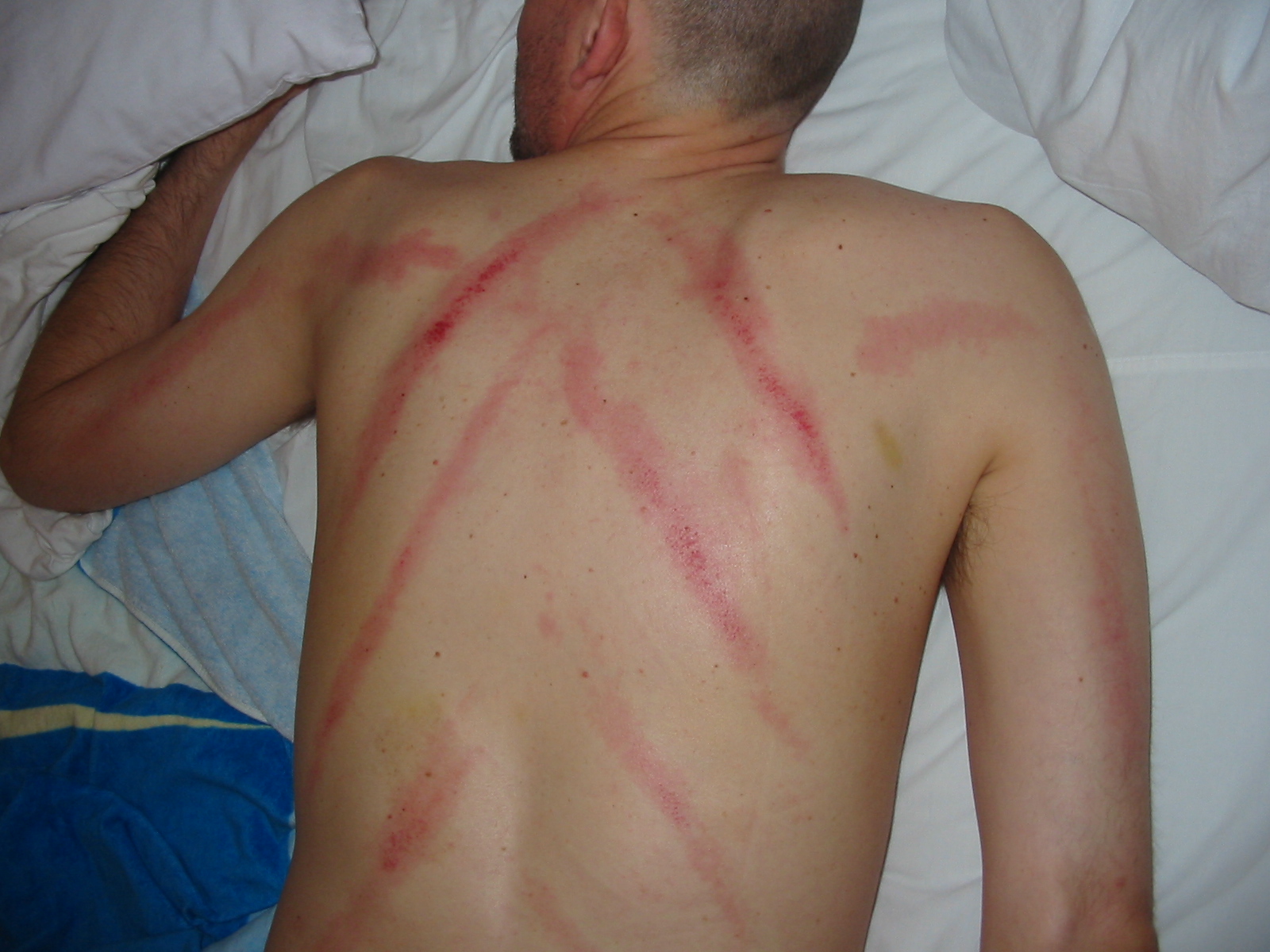
- Gua sha: a traditional East Asian treatment using repeated strokes with a smooth-edged tool over lubricated skin. Body gua sha may produce small red spots called petechiae. Cosmetic facial gua sha is a different application; body-pain studies do not validate cosmetic claims.
- IASTM: instrument-assisted soft tissue mobilization, a broad family of treatments using handheld instruments to apply controlled strokes and pressure. Graston Technique® is one branded approach within this family, rather than a synonym for every scraping treatment.
- Deep transverse friction massage: focused manual rubbing across the direction of a tendon or other tissue, often associated with Cyriax techniques. It differs from general massage and tool-assisted stroking.
Pressure, treatment length, tools, body region, and accompanying exercise vary. Results for one approach cannot automatically be transferred to another—or prove that a particular brand is superior.
Gua sha: promising short-term neck-pain findings, small studies
A 2010 systematic review included five randomized and two nonrandomized controlled trials. It found insufficient evidence to establish effectiveness for musculoskeletal pain because study quality was poor.
A later 2015 review of traditional Chinese medicine for neck and low-back pain included a few small gua sha trials. In one neck-pain trial with 48 participants, gua sha reduced pain more than heat treatment after one week: the between-group difference was 29.9 mm on a 100-mm pain scale (95% confidence interval, 16.6–43.3 mm favoring gua sha). This was a trial result within the review, not a pooled average across many gua sha studies.
Two other small comparisons, each involving 21 participants, favored gua sha over no treatment at seven days: 1.6 points for neck pain and 1.1 points for low-back pain on a 0–10 scale. The review rated this evidence low. Such brief studies cannot establish lasting benefit, faster return to sport, or injury repair.
IASTM and Graston: newer reviews are more favorable, but disagree
A broad review published in 2023 included 46 randomized trials and found no clinically meaningful improvement in pain, function, or range of motion. It judged the evidence very low certainty.
A 2025 review, focused on adding IASTM to other care, analyzed 11 trials with 427 participants. It reported moderate-certainty evidence for pain reduction and low-certainty evidence for improved function at treatment completion. It did not analyze later follow-up outcomes, so this is not proof of durable recovery.
The January 2026 review by Liu and colleagues reported 20 randomized trials involving 1,420 adults. Its pooled results favored IASTM for pain (standardized mean difference −0.84; 95% CI −1.07 to −0.61) and range of motion (+0.80; 95% CI +0.41 to +1.18). These are standardized effects, not points on a 0–10 pain scale or degrees of movement.
The authors rated pain and motion evidence moderate and function evidence low, but results varied substantially between trials. There are also reporting inconsistencies: the evidence table repeats the motion estimate in the pain row. We have quoted the pain estimate from the abstract and results text, and treat the findings cautiously. This review does not establish Graston-specific superiority or lasting tissue repair.
Different study selections, comparison treatments, and outcome methods help explain the conflicting reviews. A favorable average does not guarantee a worthwhile improvement for every patient.
How much extra movement might treatment provide?
A 2024 range-of-motion meta-analysis reported an average advantage of 4.94° (95% CI 3.29–6.60°) in four studies pooling patients with musculoskeletal disorders and healthy people with restricted motion. Another subgroup of healthy people without restrictions averaged 2.32° more motion. A separate test measured in centimeters showed no clear benefit.
The authors rated the evidence very low to low certainty. Measurements were taken at treatment completion, with no later follow-up included. A few degrees may help a particular activity, but are not evidence that fascia has permanently lengthened or scar tissue has been removed.
Deep friction massage: benefit remains uncertain
The 2014 Cochrane review included two trials with 57 participants with lateral elbow tendinitis or lateral knee pain associated with iliotibial band friction syndrome. It did not establish clinically important added benefit for pain, grip strength, or function.
For one elbow comparison, the pain difference was −6.6 points on a 100-point scale, with a wide confidence interval from −28.6 to +15.4. That range includes no benefit and possible worse pain. Very low-quality evidence leaves the question unresolved; it neither proves effectiveness nor proves that nobody can benefit.
Relief is different from healing
Less pain or easier movement can be useful. Those changes alone do not demonstrate collagen remodeling, adhesion breakdown, tendon regeneration, or faster muscle healing. Proposed mechanisms and animal experiments do not establish these outcomes in patients. Skin redness does not prove that toxins have left the body.
A practical role for manual treatment is to support comfortable movement while a rehabilitation plan addresses strength, activity tolerance, and function. Reassess a meaningful task—turning your head, reaching overhead, or walking—rather than judging success by how intense the treatment felt.
Safety: discuss risks before treatment
- Gua sha and IASTM can cause tenderness, redness, petechiae, or bruising. More pressure and more bruising are not measures of a better result.
- Tell your clinician about blood thinners, bleeding problems, fragile skin, reduced sensation, recent surgery, or a healing fracture. These may require modification or avoiding treatment.
- Avoid treatment over open wounds, infected or inflamed skin, or a suspected blood clot. Seek medical assessment rather than trying to scrape unexplained swelling.
- Agree on tolerable pressure and stop if treatment causes sharp or escalating pain, skin damage, or new numbness. Equipment needs appropriate cleaning and infection-control procedures.
These precautions draw on 2025 IASTM expert consensus. Expert consensus guides care but is not a guarantee of safety. Small trials and incomplete reporting can miss uncommon harms.
Getting back to what you love
At Santa Cruz Acupuncture Orthopedics & Sports Medicine Clinic, the patient-centered question is whether a treatment helps you move and function toward your goals—on the trail, in the water, or in daily life. Ask which technique is proposed, what benefit is realistic, how progress will be measured, and how it fits with exercise and other care. If relief is brief or treatment repeatedly aggravates symptoms, reassess the plan.
This article is general patient education, not an individual diagnosis or treatment prescription.
Linked research references
- Lee MS, Choi TY, Kim JI, Choi SM. Using Guasha to treat musculoskeletal pain: a systematic review of controlled clinical trials. Chinese Medicine. 2010;5:5.
- Yuan QL, Guo TM, Liu L, Sun F, Zhang YG. Traditional Chinese Medicine for Neck Pain and Low Back Pain: A Systematic Review and Meta-Analysis. PLOS ONE. 2015;10(2):e0117146.
- Nazari G, et al. Effectiveness of instrument-assisted soft tissue mobilization for the management of upper body, lower body, and spinal conditions. An updated systematic review with meta-analyses. Disability and Rehabilitation. 2023;45(10):1608–1618.
- Tang S, Sheng L, Xia J, Xu B, Jin P. The effectiveness of instrument-assisted soft tissue mobilization on range of motion: a meta-analysis. BMC Musculoskeletal Disorders. 2024;25:319.
- Tang S, Sheng L, Wei X, Liang M, Xia J, Chen J. The effectiveness of instrument-assisted soft tissue mobilization on pain and function in patients with musculoskeletal disorders: a systematic review and meta-analysis. BMC Musculoskeletal Disorders. 2025;26:257.
- Liu Y, Yu Y, Liu P, Yan J, Cheng Z. Instrument-assisted soft tissue mobilization for musculoskeletal disorders: a systematic review and meta-analysis of its effects on pain, function, and range of motion. European Journal of Medical Research. 2026;31:289.
- Loew LM, et al. Deep transverse friction massage for treating lateral elbow or lateral knee tendinitis. Cochrane Database of Systematic Reviews. 2014;(11):CD003528.
- Cheatham SW, Baker RT, Loghmani MT, Schleip R. International Expert Consensus on Instrument-Assisted Soft-Tissue Mobilization Precautions and Contraindications: A Modified Delphi Study. Healthcare. 2025;13(6):642. Safety consensus, not an efficacy review.